
Description
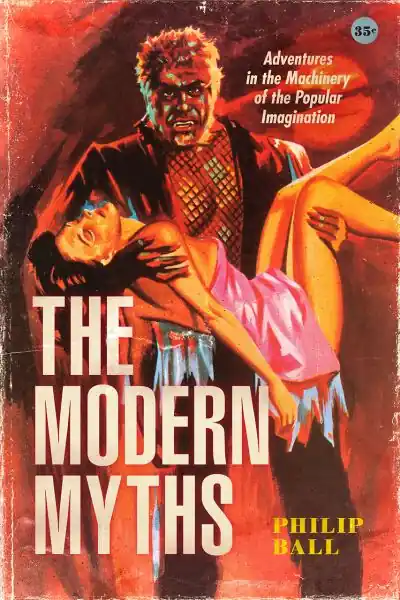
With The Modern Myths, brilliant science communicator Philip Ball spins a new yarn. From novels and comic books to B-movies, it is an epic exploration of literature, new media and technology, the nature of storytelling, and the making and meaning of our most important tales. Myths are usually seen as stories from the depths of time-fun and fantastical, but no longer believed by anyone. Yet, as Philip Ball shows, we are still writing them-and still living them-today. From Robinson Crusoe and Frankenstein to Batman, many stories written in the past few centuries are commonly, perhaps glibly, called “modern myths.” But Ball argues that we should take that idea seriously. Our stories of Dracula, Dr. Jekyll and Mr. Hyde, and Sherlock Holmes are doing the kind of cultural work that the ancient myths once did. Through the medium of narratives that all of us know in their basic outline and which have no clear moral or resolution, these modern myths explore some of our deepest fears, dreams, and anxieties. We keep returning to these tales, reinventing them endlessly for new uses. But what are they really about, and why do we need them? What myths are still taking shape today? And what makes a story become a modern myth? In The Modern Myths, Ball takes us on a wide-ranging tour of our collective imagination, asking what some of its most popular stories reveal about the nature of being human in the modern age.
About the Author
Philip Ball is a freelance writer and broadcaster, and was an editor at Nature for more than twenty years. He writes regularly in the scientific and popular media and has written many books on the interactions of the sciences, the arts, and wider culture, including H2O: A Biography of Water and The Music Instinct. His book Critical Mass won the 2005 Aventis Prize for Science Books. Ball is also the 2022 recipient of the Royal Society’s Wilkins-Bernal-Medawar Medal for contributions to the history, philosophy, or social roles of science. He trained as a chemist at the University of Oxford and as a physicist at the University of Bristol, and he was an editor at Nature for more than twenty years. He lives in London.